

What is Tensile splitting strength testing of concrete?
Tensile splitting strength testing is an indirect measure evaluating concretes resistance to tensile loading and the materials ability to resist cracking.
How does Tensile splitting strength testing work?
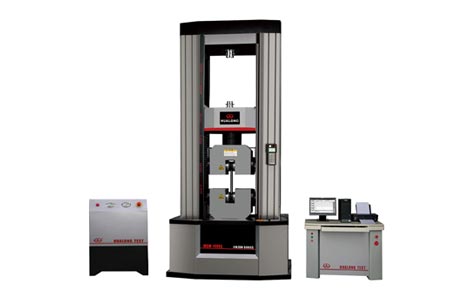
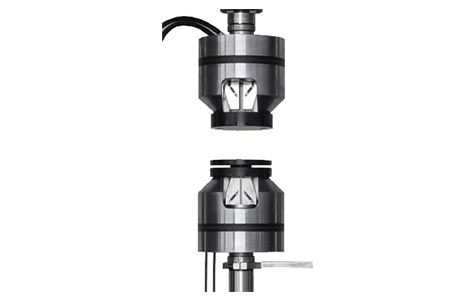
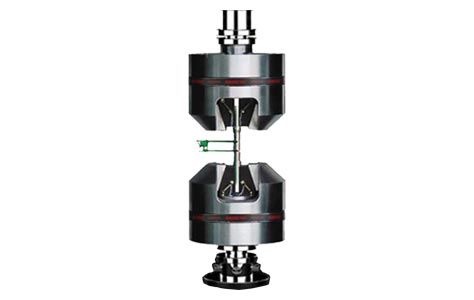
The test works by applying compression to a narrow region along the centre of a cylindrical core using a compressive-Testing Machine. Force levels are increased until a vertical crack is created along the central axis of the cylinder, splitting the specimen.
Test schematic for tensile splitting test

Figure 1: Tensile splitting test on concrete core

Figure 2: Test schematic for tensile splitting test
What is Tensile splitting strength testing used for?
Deterioration process
Defects
Control of repairs
Deterioration processes involving bulk concrete.
Internal microcracks
Deterioration of interfaces
How do I carry out Tensile splitting strength testing?
The procedure for tensile splitting strength testing of concrete is laid out in BS EN 12390-6.
Test specimens must be cored from existing structures, or, cast in cylindrical moulds and stored in in laboratory conditions as per BS EN 12390-1 and BS EN 12390-2.
Where shapes/dimensions of specimens exceed the respective tolerances of BS EN 12390-1, level uneven surfaces by grinding and correct any deviation of angles by cutting and/or grinding.
Measure the test specimen and calculate the average diameter to the nearest 0.2 mm.
Place the test specimen centrally in the testing machine, optionally using a jig.
Carefully position packing strips and, if required, loading pieces, along the top and bottom of the plane of loading of the specimen (Figure 2).
Select a constant rate of stress within the range 0.04 MPa/s (N/mm²·s) to 0.06 MPa/s (N/mm²·s).
Apply an initial load which must not exceed 20% of the failure load.
Apply increasing loads to the specimen at a rate determined via Equation 1; until no greater load can be sustained.
Reliated News
- ISO 527-2 ASTM D638 The Definitive Guide to Performing Tensile Testing on Plastics
- 30 TON Servo Hydraulic Universal Testing Machine will Be Sent to Bulgaria
- 6500kN Hualong Testing WJM Series Electro-hydraulic Servo Static Load Anchoring Test Machine
- Biaxial Tensile Testing Machine
- ASTM E83, ASTM C139 Universal Testing Machine and Compression Testing Machine Installation
FRIEND LINK:
No. 389 Chuanhong Road, Pudong New Area, Shanghai 201202, China
Tel: +86 17821945087
Online Service: 7*24h


© 2018 HUALONG All rights reserved. SiteMap